
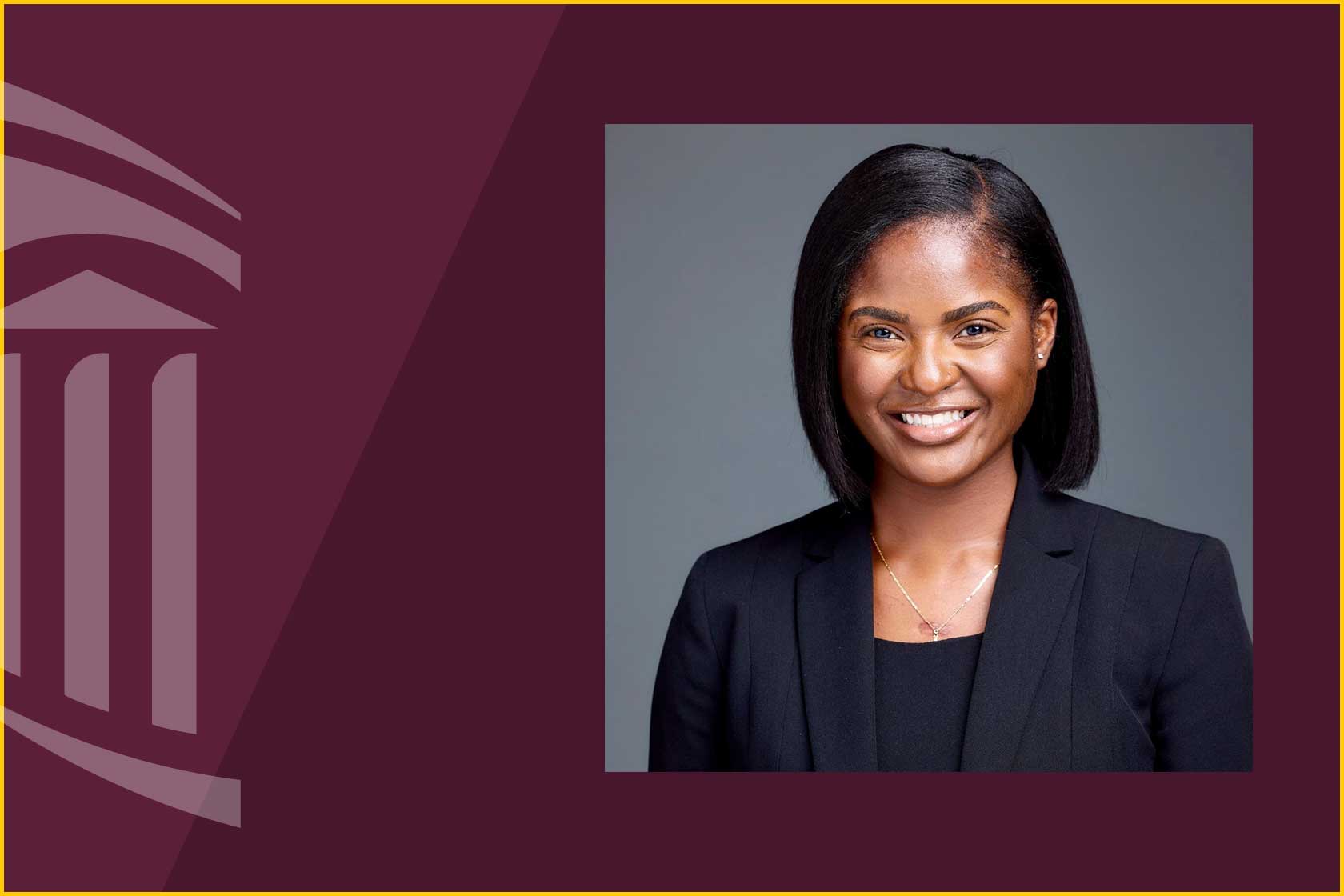
The Business Law Program is thrilled to welcome Jhonell Campbell ’19 back to Maryland Carey Law as the newest coach for our Transactional Law Team. An accomplished alumna and a practicing corporate attorney at Saul & Ewing LLP, she brings both a deep understanding of the skills students need to succeed and real-world insight into the transactional law practice. As she focuses her practice on advising business clients on mergers and acquisitions and commercial transactions, her return as a coach reflects a full-circle commitment to mentoring the next generation of transactional lawyers, and we’re thrilled to have her expertise, perspective, and enthusiasm guiding our students this year.
The Transactional Law Team delivered another outstanding performance this year, demonstrating exceptional legal analysis, negotiation, and client advocacy while competing against talented teams from across the country in competitions at the University of California, Los Angeles School of Law, Duke University School of Law, and William & Mary Law School.
Teammates Aleksandra Bekirova ’26 and Victoria Jung ’27 earned third place in the Duke competition while teammates Matthew D’Ambrosi ’26 and Hannah DeGraw ’26 earned second place at William & Mary.
We were able to catch up with Jhonell to ask her about this new experience:
As a Maryland Carey Law alum, what has it meant to return as a coach for the Transactional Law Team, and how does this role differ from your experience as a student competitor?
Returning as a coach has been especially meaningful because I was once in a similar position as the students, competing on the Trial Team. Although the Transactional Law Team and Trial Team are different, they both help students develop confidence, craft clear and concise legal arguments, and the ability to think quickly on their feet. It feels rewarding to now support students as they develop some of the same practical skills that helped shape my own career path.
Drawing on your practice in mergers and acquisitions and commercial transactions at Saul Ewing LLP, what real-world skills do you most hope to instill in our student competitors?
I hope to help students develop the ability to analyze business objectives, identify key risks, and translate those considerations into practical contractual solutions. I love contract drafting, so I also hope they pick up a thing or two that will influence their own drafting style.
Another important skill is learning how to advocate effectively while maintaining a collaborative tone that keeps negotiations productive. Ultimately, I want students to leave the experience thinking like deal lawyers who understand both the legal and business sides of a transaction.
The Transactional Law team competes in multiple competitions each year. The team’s first competition under Coach Campbell’s leadership was hosted by the UCLA School of Law. Representing Maryland Carey, Amber Miller ’26 and Carleigh Solomon ’27 demonstrated strong preparation and poised advocacy in a challenging transactional negotiation setting. What stood out to you about our team’s performance at the competition hosted by UCLA School of Law, and what did you learn from that first experience as coach?
What stood out most to me was the students’ professionalism and strong sense of partnership throughout the competition. They worked seamlessly as a team and approached negotiations in a way that was collaborative yet appropriately firm when advocating their client’s interests. Watching them reinforced how important preparation and teamwork are in transactional settings.
As a first-time coach, it was helpful to see how other teams approached their negotiations and to learn what the judges liked and didn’t like. Learning that information will inform how I assist the team with future competitions. I also learned how rewarding it is to guide students through the process and watch their confidence grow as they apply what they have learned.
Transactional competitions require both technical precision and strategic judgment. What separates a good negotiation from a great one in these settings?
A good negotiation demonstrates a strong understanding of the deal terms and the client’s objectives. A great negotiation goes a step further by prioritizing issues strategically and finding creative solutions that move the deal forward. The most effective negotiators listen carefully, understand the other side’s motivations, and identify opportunities for mutually beneficial outcomes. In transactional practice, success is not just about winning a point… it is about advancing your client’s goals while keeping the negotiation productive.
For students and alumni interested in transactional practice, what advice would you offer about building the skills, relationships, and mindset necessary to succeed in this field?
Students interested in transactional practice should focus on developing both technical drafting skills and a strong understanding of how businesses operate. Understanding how a business operates will help the students develop creative and pragmatic solutions to meet client needs. I would also encourage students to approach the work with curiosity and a willingness to learn from every deal and negotiation. The most successful transactional lawyers are collaborative and combine attention to detail with a practical, solutions-oriented mindset.
Thank you to Coach Campbell and we wish you the best of the luck in the upcoming year!