
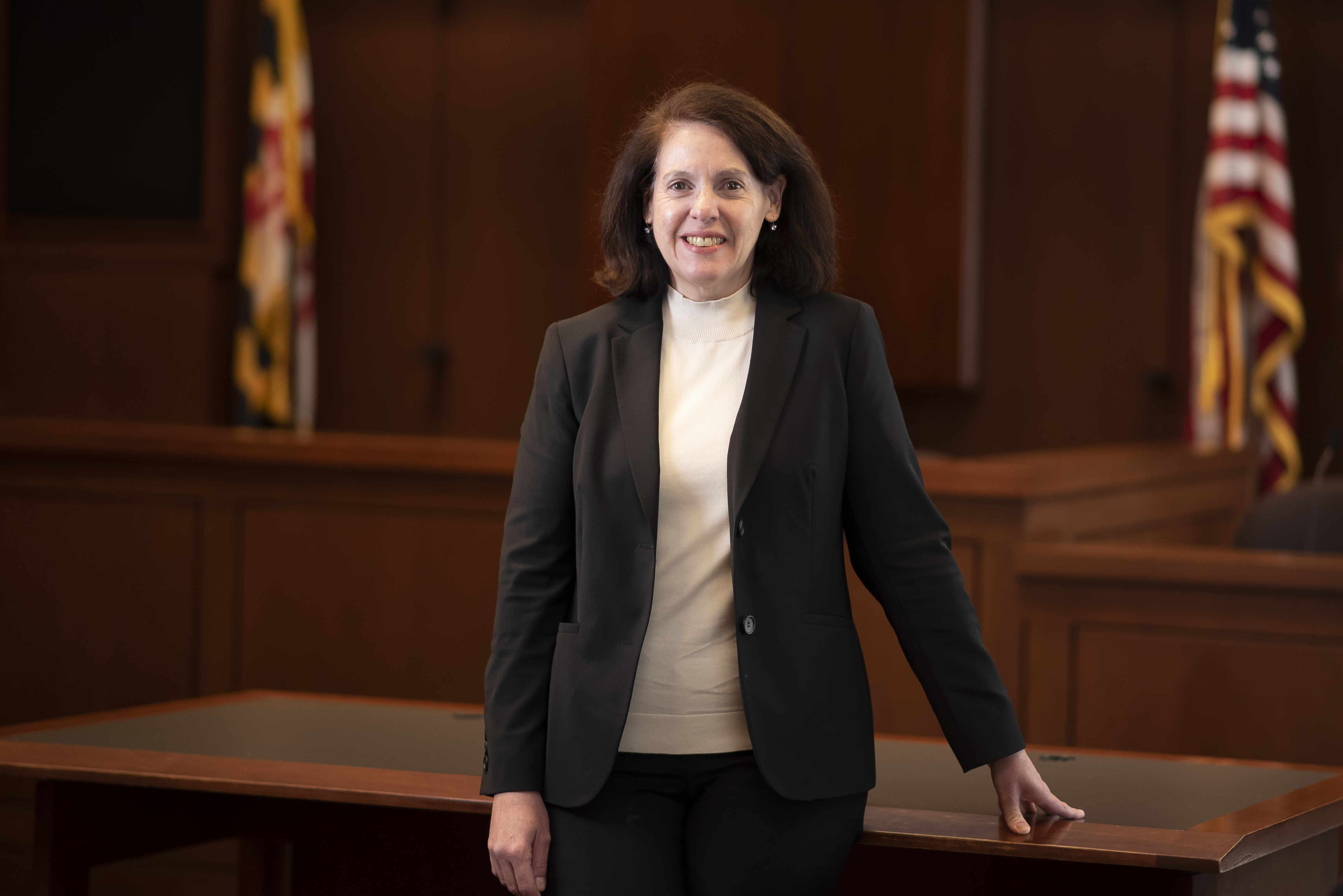
Reflecting a shift in emphasis toward technology-related law, the University of Maryland Francis King Carey School of Law announces the renaming of its intellectual property (IP) academic program, which includes a state legal resource center and legal clinic.
These components now make up the Intellectual Property and Technology Law Program. Likewise, the clinic is now the Intellectual Property and Technology Law Clinic, and the center, which encompasses the clinic and includes other community outreach, is now called the Maryland Intellectual Property, Technology and Entrepreneurship Center (MIPTEC).
For nearly 20 years, Professor Patricia Campbell has led Maryland Carey Law's IP program, which offers specialty training for students pursuing a JD or LLM. Students in the track prepare to be intellectual property attorneys through coursework in the four major areas of intellectual property law: patent, trademark, copyright, and trade secrets. They also engage in experiential learning through the clinic, which enables students to assist inventors, designers, authors, and engineers in pursuing patents and copyright protections for their original work, predominantly in high-tech areas, such as aerospace (think drones), biomedical devices, and software.
In this Q&A, Campbell discusses why the new name better reflects the program.
How does the name change reflect the reality of the program?
We've had an IP program for a very long time. And if you have an IP program, you have a technology focus. You can't do patent law without being technology focused. We have been increasing our emphasis on technology because we're seeing a demand in the legal community and in the business community for attorneys who understand technology law and how to use the new tools that are coming online.
We are also expanding student training to include the exploration of novel legal issues such as the patentability of machine learning inventions and protectability of creative works made using generative AI. Our students are learning about the use of emerging technological tools in law practice, including artificial intelligence platforms for legal research generally, and specifically, for patent preparation, drafting of technology licenses, and IP management.
How does your research fit in?
I think the name change also reflects the work that I do, and that my center does, that's very technology law focused.
I've been doing a lot of research in the last few years about counterfeit semiconductors. My recent scholarly articles include "Debugging the Trademark Laws Part II: Criminal Penalties for Trafficking in Counterfeit Microelectronics" in the Southern Methodist University Science & Technology Law Review and "Debugging the Trademark Laws: The Lanham Act and Counterfeit Microelectronics" in the Texas Intellectual Property Law Journal.
What factors have enabled the academic program to expand its technology-related work?
In the early days, the clinic and center were also focused on training students to help local entrepreneurs establish their businesses, in addition to our IP-focused work. Now we can expand our capacity to assist clients with their high-tech inventions and related issues because the law school is establishing a small business clinic that will take on the work for emerging businesses.
Why do lawyers need to be trained in the use of AI and AI laws?
We know that firms are expecting our students to show up for work knowing how to use AI tools. Our job is to teach them to use them responsibly and ethically. Imagine a world where attorneys conducted legal research by doing a search with AI and blindly using whatever comes up in their briefs. Those are the people being sanctioned by courts for including "hallucinations"—or cases that don't exist—to make their arguments. Training future lawyers to use these developing technologies in a positive way is vital for the future of the legal profession. That is the new task our program is taking on.