Nearly anyone who’s seen an American crime show knows the refrain: You have the right to an attorney. If you cannot afford a lawyer, one will be provided for you. This is true in criminal cases, but, as clinical instructor Maureen Sweeney knows, not in immigration cases: a person facing deportation has no right to representation, even when the consequences may be imprisonment or death.
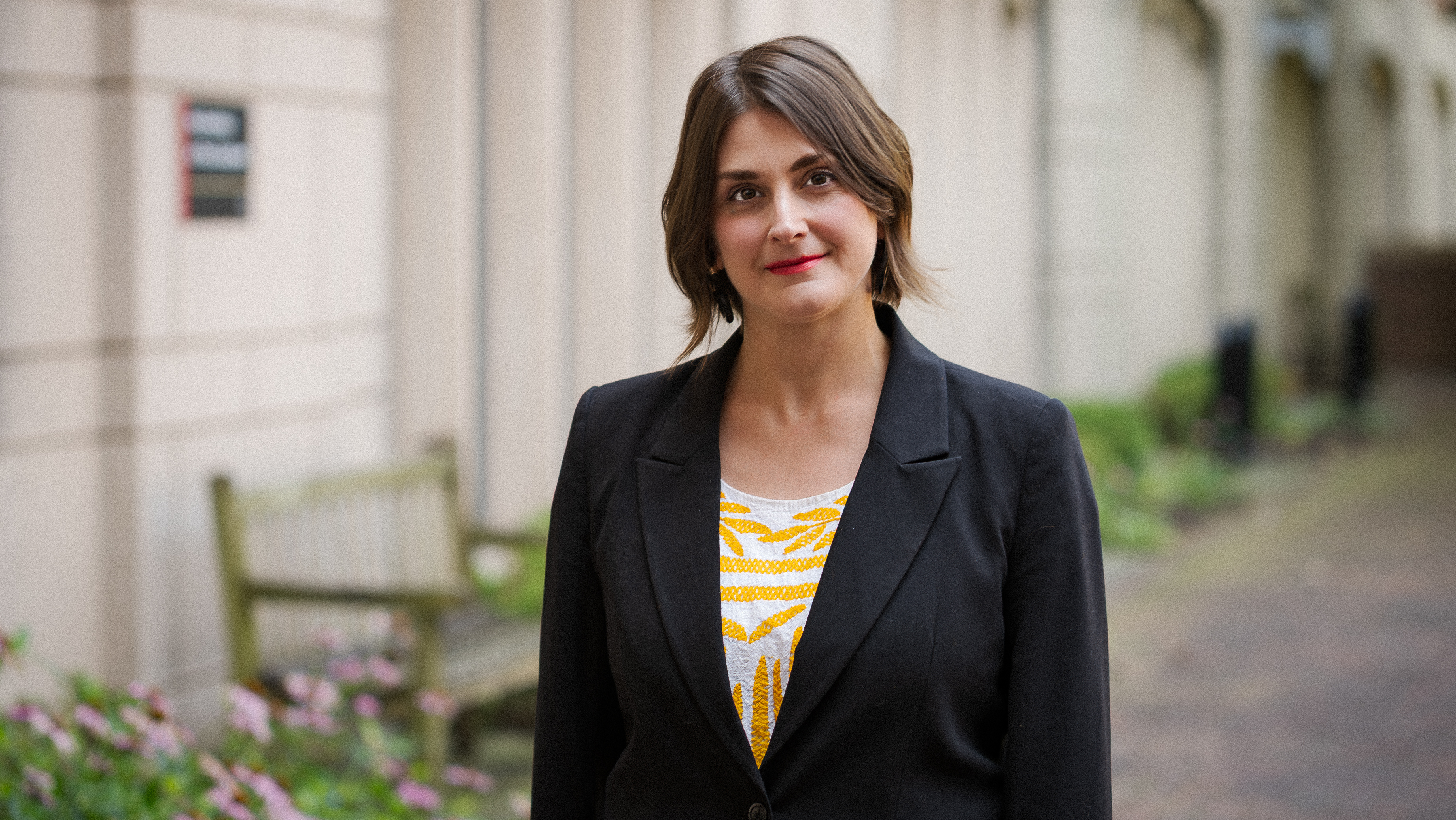
Sweeney, who has taught UM Carey Law’s Immigration Clinic since 2004, is an experienced immigration lawyer who worked for Catholic Charities and Lutheran Immigration Refugee Services. Before her arrival, the clinic was offered sporadically, but under Sweeney’s helm, it became a regularly featured course.
The clinic’s clients are often victims of political persecution or domestic violence. “Our most important work is keeping Maryland families together,” says Sweeney. She recalls a client on the Eastern Shore who was married to a violent U.S. citizen. The couple’s son, also a U.S. citizen, suffered from a congenital health disorder. With the clinic’s help, the client obtained permanent-resident status, allowing her to live apart from her abusive husband while their son continued receiving the treatment he needed at Johns Hopkins.
Many of the clinic’s political asylum clients, notes Sweeney, are highly educated; the clinic helps them to “get themselves back on their feet and contribute.” Referrals flow from many sources, including social service providers and the Immigration Court itself. The clinic also works with the Office of the Public Defender to advise its clients on immigration consequences; one of the clinic’s alumnae, Emily Datnoff, recently won an Open Society Institute-Baltimore Community Fellowship to pursue this work.
Regardless of what they do after graduation, clinic alumni are well prepared for any type of trial work, Sweeney says. The clinic’s students “carry on the whole trial,” she explains: “They’re really the lawyer.” And because immigration law crosses over with law in other countries, students gain a broader perspective of how legal systems throughout the world may or may not function.
Want to contact the Immigration Clinic? Call (410) 706-3295.
Rachel Granfield