- Home
- About
- Prof. Danielle Citron Presents at Yale and Harvard on Information Technology's Transformation of Law
From the 2008 News Archive
Prof. Danielle Citron Presents at Yale and Harvard on Information Technology's Transformation of Law
Assistant Professor
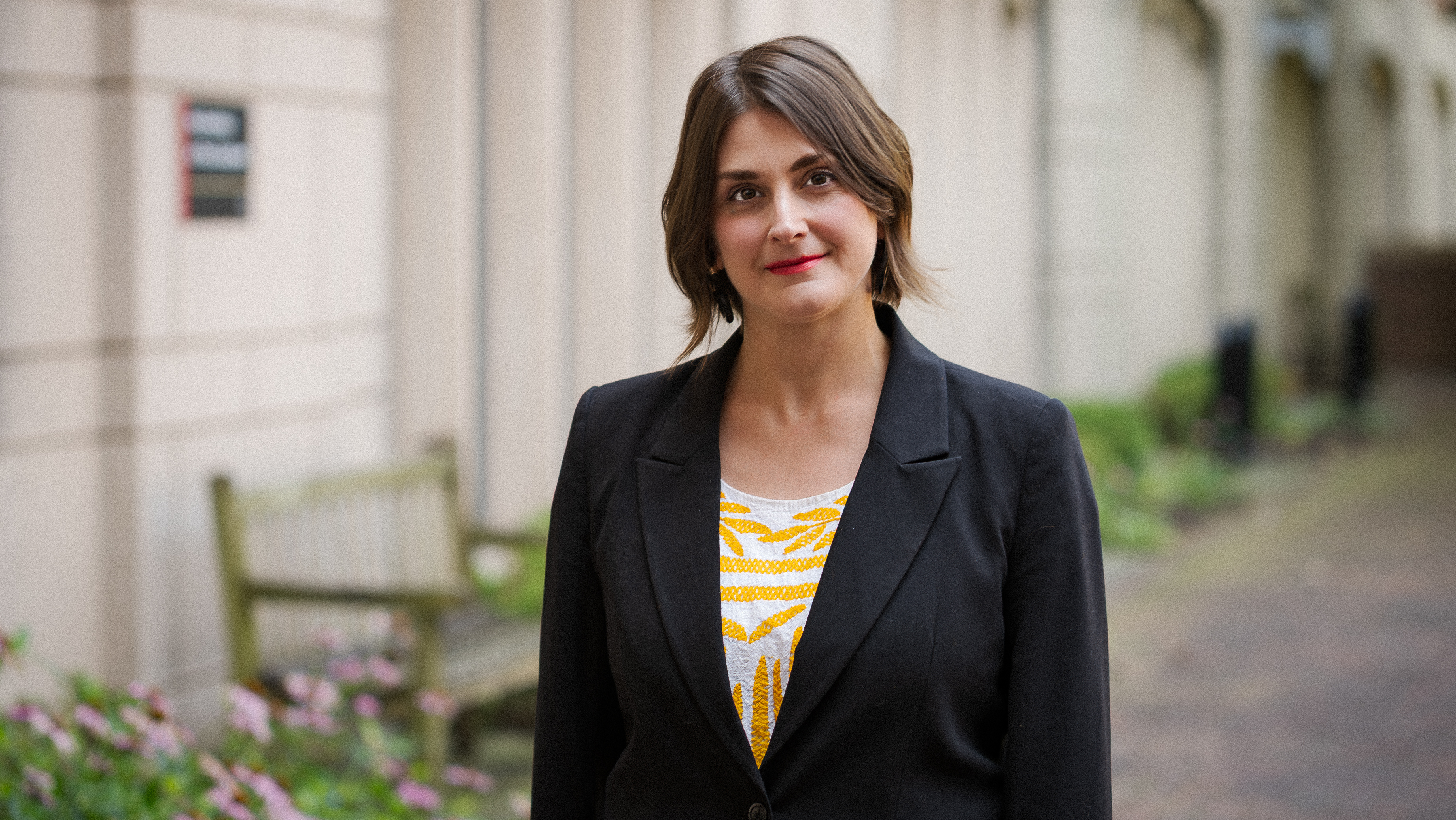
Danielle Citron continues to garner attention for her groundbreaking scholarly work about information technology’s transformative effect on law and legal theory.
In October, she presented "Open Code Governance" at the University of Chicago Law School's
Law in a Networked World Symposium.
In December, she
presented "Destructive Crowds: New Threats to Online Reputation and Privacy" at the Yale Law School’s
Symposium on Reputation Economies in Cyberspace.
"Threats, lies, and the disclosure of private facts discourage women from blogging in their own names. Women lose opportunities to establish online identities that would enhance their careers and attract clients. Destructive online groups prevent the Web from becoming an inclusive environment. Disappointingly, this phenomenon throws us back to the nineteenth century, when women wrote under gender-neutral pseudonyms to avoid discrimination," wrote Citron.
"Web 2.0 technologies provide all of the accelerants of mob behavior but very few of its inhibitors. . . . Individuals who feel anonymous do and say things online that they would never seriously entertain doing and saying offline because they sense that their conduct will have no consequences. A site operator’s decision to keep up damaging posts encourages destructive group behavior. Online mobs also have little reason to fear that their victims will retaliate against them."
In January, Professor Citron
presented the paper, "Technological Due Process," to the Berkman Center for Internet and Society at Harvard Law School, where she detailed how technology and computer automation are altering due process and offered a new model for procedural regularity that embraces automation without sacrificing due process.
"Today, computer systems make decisions about important individual rights they terminate Medicaid benefits, decide who is not allowed to fly commercial airlines, and mislabel individuals as dead-beat parents. Last century's due process norms, however, are ill-suited to protect individuals from arbitrary agency action," said Citron.
"At the same time, automation impairs participatory rulemaking, the traditional stand-in for individualized due process. My piece develops a new model of procedural regularity and policy-making that can operate when pivotal government decisions are made by automated systems and the programmers who design them."
Prof. Citron's article, "Minimum Contacts in a Borderless World: Voice over Internet Protocol and the Coming Implosion of Personal Jurisdiction Theory," appeared in the
U.C. Davis Law Review in 2006. Her article, "Reservoirs of Danger: The Evolution of Public and Private Law at the Dawn of the Information Age," was published by the
Southern California Law Review in 2007.
"Technological Due Process," will appear this year in the
Washington University Law Review, and "Open Code Governance" will be published by the
University of Chicago Legal Forum.
Professor Citron teaches Civil Procedure, Information Privacy Law, LAWR I, and Appellate Advocacy. She was voted the "Best Teacher of the Year" by the University of Maryland law school students in 2005.
Before teaching, Professor Citron worked as a litigation associate at Willkie, Farr & Gallagher. While at Willkie Farr, she served as a MFY Legal Services Fellow, representing clients in landlord-tenant matters. She served as a law clerk for two years for the Honorable Mary Johnson Lowe of the United States District Court for the Southern District of New York. Professor Citron taught as an adjunct associate professor at Fordham University School of Law from 1997 until the spring of 2006.